The history of the LNS

  • The Origins of the Laboratory

    As the discoveries of Pasteur and Koch revolutionised medicine, Luxembourg recognised the importance of establishing a national laboratory. Dr August Praum, who trained at the Pasteur Institute, advised the Luxembourg government on the establishment of a laboratory in Luxembourg.

    The law of 17 April 1900 officially established the institution. The Practical Laboratory of Bacteriology was created, with Dr August Praum becoming its first Director.

    At the time, the team consisted of just five people (a director, an attendant, a physician, a chemist and a veterinarian), but their mission was ambitious: to protect the health of the Luxembourg population through science.

  • The Verlorenkost Site: A Symbol of Modernity

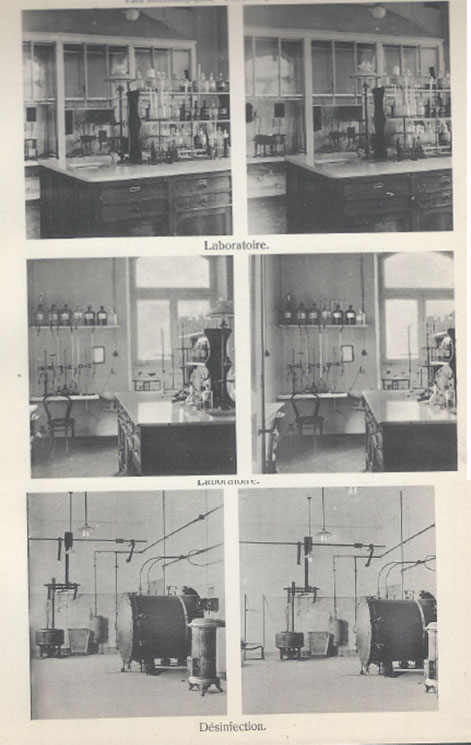
    Before 1886, the Medical College laboratory, the predecessor of the LNS, was located on rue du Nord in Luxembourg City, opposite the former Palace of Justice, and was later moved to rue Clairefontaine following a fire. This latter location was deemed unsuitable, leading to the decision to construct a new standalone building to minimise the risk of contamination.

    To develop the project, those responsible for its design drew inspiration from foreign examples, visiting several laboratories in Germany, Switzerland and Paris before presenting the first plans at the end of 1899.

    The law of 18 May 1902 authorised the construction of the National Laboratory on the Verlorenkost hill in Luxembourg City. Architects Prosper Biwer and later Sosthène Weis designed a sober and harmonious Neo-Renaissance building, which was inaugurated in 1907. Built away from residential areas to minimise the risk of contamination, the building was regarded as the “temple of hygiene” and became the beating heart of Luxembourg’s public health system for decades.

  • Decades of Evolution and Transformation: The Birth of the LNS

    The Laboratory grew and evolved. In 1922, it became the Bacteriological Veterinary Laboratory. To meet growing needs and accommodate its expanding range of activities, a second building was constructed on rue du Laboratoire in the 1960s.

    In 1965, the Laboratory was renamed the Institute of Hygiene and Public Health, before officially becoming the Laboratoire national de santé (LNS) in 1980, the institution’s name to this day.

  • Transformation and Modernisation of the LNS: A New Law and New Premises

    The law of 7 August 2012 marked a decisive milestone in the history of the Laboratoire national de santé. It granted the LNS the status of a public institution under the supervision of the Ministry of Health and Social Security and established it as a multidisciplinary institute structured around Scientific Departments and an Administrative and Financial Department.

    The transformation of the LNS continued. The construction of a state-of-the-art building bringing together all LNS activities was decided. The LNS moved to Dudelange, into a building designed to support its development and meet the highest standards of technology and sustainability.

    The successive inaugurations of Buildings 1 and 2 of the new LNS headquarters in Dudelange took place on 11 October 2013 and 24 January 2018, in the presence of the Minister for Sustainable Development and Infrastructure and the Minister of Health at the time.

  • The move marked a turning point: the LNS entered an era of modernisation and expansion of its missions and areas of expertise. In 2017, it reorganised its activities around six Scientific Departments (Medical Biology, Genetics, Forensic Medicine, Microbiology, Pathology and Health Protection) and an Administrative and Financial Department.

    The law of 8 March 2018 transformed the Departments of Genetics and Pathology into the National Center for Genetics and the National Center for Pathology, marking a major milestone in the development of the LNS.

  • COVID-19 Health Crisis: On the Front Line of the Pandemic

    The LNS mobilised to respond to the COVID-19 health crisis. It increased its testing capacity, established sampling centres and trained mobile teams, while monitoring variants in collaboration with the Luxembourg Institute of Health (LIH) and the Health Directorate.

  • The LNS Today: Bridging Heritage and the Future

    With more than a century of history behind it, the National Health Laboratory continues to pursue its mission with the same determination: protecting the health of everyone in Luxembourg by ensuring the quality of diagnostics and supporting research.

    Its multidisciplinary teams and scientific commitment make the LNS an institution firmly rooted in its history while looking towards the future.

Historical sources

Sources : LNS Archives, National Archives, Luxembourg Society for Microbiology, Tageblatt article.