Last updated 15.09.2026
Our services
Discover all the services offered by the Department, as well as the expertise and resources available to you.
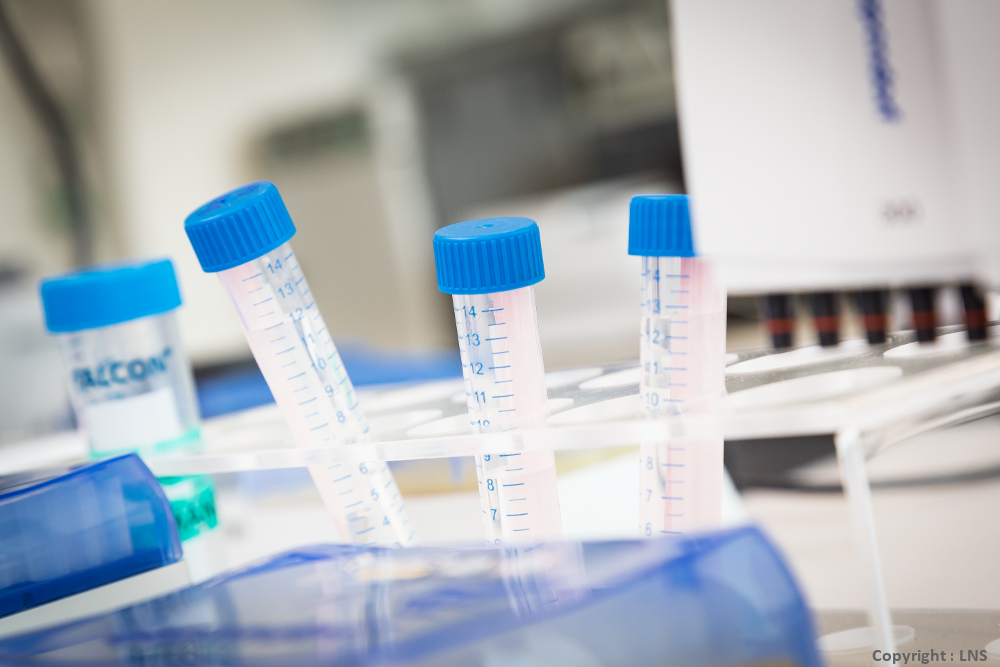
The Department is in charge of:
a. Laboratory analyses
b. Field sampling
c. Monitoring programs in the population for environmental and occupational health
d. Medical consultations at the National Hospital Service for Environmental Medicine (SHNME) at the Hospital Center Emile Mayrisch (CHEM)
e. European strategic programs supporting scientific policy, regulations, and directives
f. Risk evaluations and health impact assessments
g. Reporting of priorities towards the competent authorities
h. Accreditations and certifications for the activities a, b, c, f
The Service Environmental Hygiene and Human Biological Monitoring:
a. Laboratory analyses
The laboratory measures chemical compounds, microbiological agents, and metabolites in environmental matrices (mainly in air, dust, and surface samples) and in biological matrices such as blood and urine (“Human Biomonitoring HBM”).
Indoor Pollution Chemistry (IPCHEM):
- Volatile organic compounds in air, for example: benzene and toluene;
- Aldehydes in air, for example: formaldehyde;
- Semi-volatile organic compounds in dust:
- Biocides and pesticides, for example: Chlorpyrifos;
- Flame retardants, for example : polybromodiphenyethers (PBDE) and Polychlorbiphenyls (PCB);
- Plasticizers, for example : phthalates and bisphenol A;
- Polycyclic aromatic hydrocarbons, for example : phenanthrene and pyrene
- Inorganic elements in dust, for example : lead and mercury
Microbiology of the built environment (MoBe):
- Molds and yeast in air, dust and surface samples, for example: Penicillium sp. and Aspergillus sp
- Allergens in dust samples, for example: dust mites
- Bacteria in air samples
Human Biomonitoring (HBM):
- Inorganic elements:
- in urine, for example: chromium, mercury and iodine;
- in blood, for example: mercury and lead;
- in serum, for example: copper and zinc.
- Organic compounds:
- in urine, for example: S-phenyl mercapturic acid (SPMA) and S-benzyl mercapturic acid (SBMA);
- in serum, for example: Hexabromocyclododecane (HBCDD), polybromodiphenyethers (PBDE) and Polychlorbiphenyls (PCB).
For more information on the analyses we perform, please consult our Analysis Catalog.
The Service Medical Expertise and Data Intelligence:
a. Field sampling
Sampling of environmental and human biological samples in the field (home, work, other private or public buildings, etc.)
b. Monitoring programs in the population for environmental and occupational health:
Implementation of epidemiological surveys/monitoring systems for human biomonitoring and environmental exposure: development of protocol and case record forms (CRFs), ethical approval, field execution, laboratory analyses, statistical analyses, survey reporting, and systematic reporting. The latter consists in the set-up of registries to report data towards the European agencies, including EEA and ECHA, and indicators towards the Health Directorate.
c. Medical consultations at the National Hospital Service for Environmental Medicine (SHNME) at the Hospital Center Emile Mayrisch Hospital(CHEM)
d. European strategic programs supporting scientific policy, regulations, and directives
Implementation of programs for Luxembourg, management of partnerships with other institutions in the country (research institutes, hospitals, etc.), and representation of the Health Directorate in the governing bodies at their request. The Department is/has been in charge of :
-
- Environmental Exposure Assessment Research Infrastructure EIRENE (2025–…)
- Partnership for the Assessment of Risks for Chemicals PARC (2022–2029)
- Science and policy for a healthy future – HBM4EU (2017–2022)
e. Risk evaluations and health impact assessments:
Estimation of the expected health risk based on exposures measured in patients and vulnerable populations. Where possible, this step also includes variables of lifestyle in the estimations of the toxicological risk and in the statistical analyses.
f. Reporting of priorities towards the competent authorities:
Informing authorities of priorities in terms of health and health risks by means of appropriate reporting tools.